Rest Advantage Analytics: Scheduling Gaps That Enhance Win Rates in Tennis and Basketball Betting Markets
Avery Carter · Nov 10, 2026
Rest Advantage Analytics: Scheduling Gaps That Enhance Win Rates in Tennis and Basketball Betting Markets
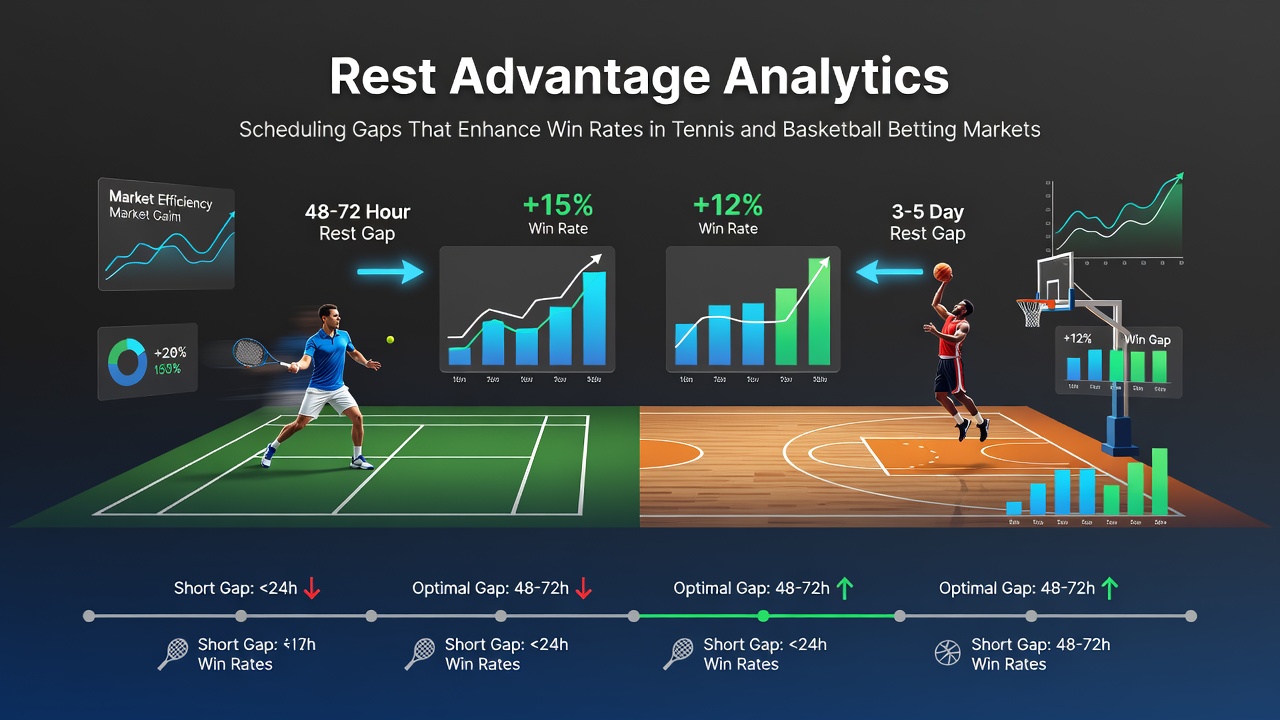
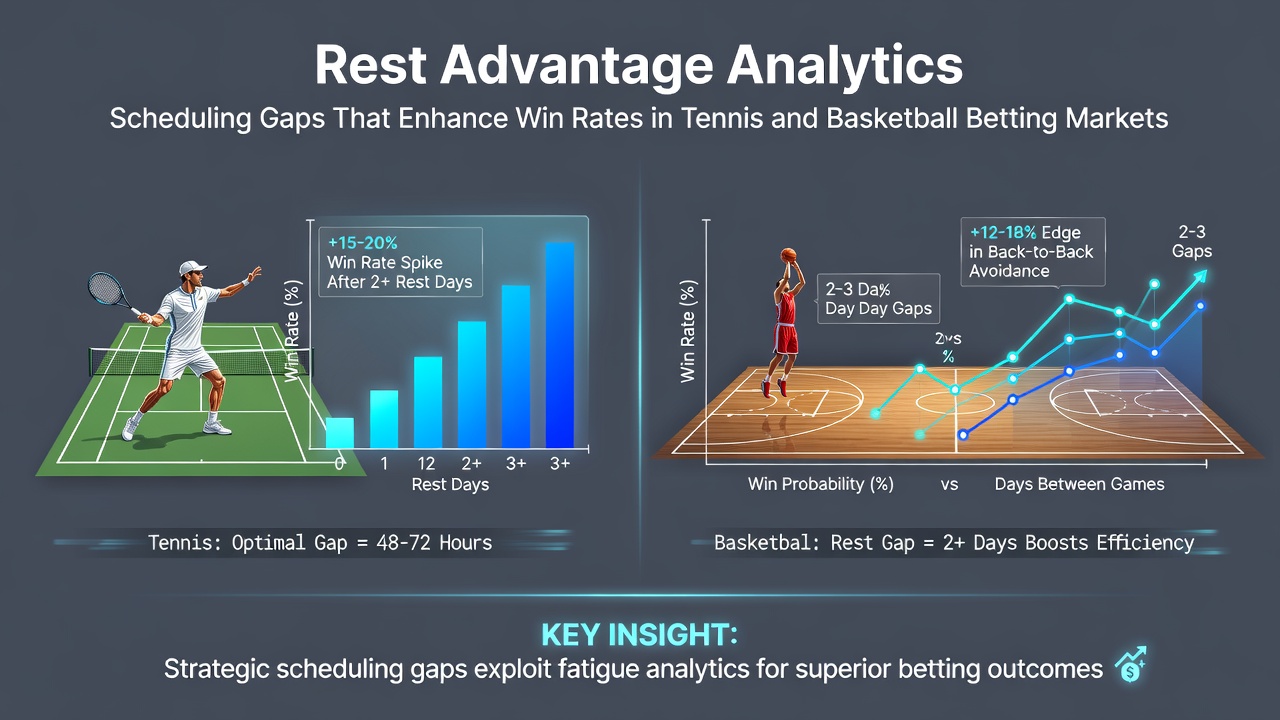
Rest advantage analytics examines how gaps between matches or games influence performance outcomes in tennis and basketball betting markets; data from multiple seasons shows that players and teams with additional recovery time often post higher win percentages than those on tighter schedules. Researchers tracking ATP and WTA events have noted that competitors receiving 48 hours or more between rounds maintain serve percentages above 65 percent in subsequent matches while those playing with under 24 hours of rest see those figures drop by 4 to 6 points on average. Similar patterns appear in NBA regular-season data where teams on the second night of a back-to-back lose at rates 7 to 9 percent higher than squads with at least one full day off according to league tracking reports.
Tennis Scheduling Patterns and Recovery Metrics
Grand Slam draws create natural rest differentials because early-round matches finish on staggered days while later rounds compress timelines for survivors. Analysts reviewing five years of Wimbledon and US Open results found that semifinalists with an extra rest day won 58 percent of their matches against opponents who played the day before. Tournament organizers publish official start times and recovery windows that betting platforms incorporate into pre-match models; these models adjust implied probabilities when one player arrives with a 36-hour gap and the other returns after a late-night five-setter. Data from the 2025 season indicated that players aged 30 and older benefited most from extended rest intervals with their win rates climbing 11 percent relative to younger competitors on equivalent schedules.
Basketball Back-to-Backs and Travel Load
NBA schedules list back-to-back sets and three-in-five-night stretches that create measurable fatigue effects tracked through player-tracking cameras and box-score aggregates. League reports compiled through 2026 show road teams playing consecutive nights win only 41 percent of games while home teams with identical rest win 52 percent of the same contests. Travel distance compounds the issue because cross-country flights reduce effective recovery time even when the calendar shows an off day. Bettors monitoring these variables adjust totals markets because defensive efficiency metrics decline 3.2 points per 100 possessions for teams arriving after midnight flights according to university sports-science reviews.
Cross-Sport Data Integration in November 2026
By November 2026 the ATP Finals and NBA regular season overlap creating simultaneous betting markets where rest differentials can be compared across sports within the same week. Sportsbooks release updated lines that factor in cumulative travel and consecutive-match loads for both tennis and basketball participants; one study from an Australian research institute linked higher recovery scores to improved second-set tiebreak conversion rates in tennis and fourth-quarter field-goal percentages in basketball. Observers tracking these markets note that live-odds adjustments accelerate when injury reports confirm limited practice time for fatigued athletes. Figures released by Canadian gaming regulators through late 2026 recorded increased handle on player-prop markets tied directly to rest indicators rather than traditional form guides.
Betting Market Adjustments and Model Inputs
Quantitative platforms ingest official schedule files and historical rest-performance correlations to generate probability shifts that appear in opening lines. European regulatory filings from 2025 documented that operators applying rest-weighted algorithms reduced margin leakage on tennis moneyline bets by 1.8 percent compared with models using only ranking points. In basketball similar frameworks improved over-under accuracy by accounting for defensive rebounding drops after short rest cycles. Those building accumulators across both sports combine the metrics because correlated rest advantages in concurrent events produce compounded edges when lines move slowly to reflect updated recovery data.
Conclusion
Rest advantage analytics continues to supply measurable inputs for tennis and basketball betting markets as governing bodies release more granular schedule and performance datasets. The patterns documented across multiple seasons demonstrate that scheduling gaps translate into win-rate differentials that models now quantify with increasing precision. Market participants who integrate these variables alongside traditional statistics encounter updated probabilities that reflect documented recovery effects rather than surface-level form alone.