Social Media Sentiment Waves Reshaping Live Odds Across Football Fixtures, Tennis Majors, and Major Racing Meets
Blake Schmitz · Oct 27, 2026
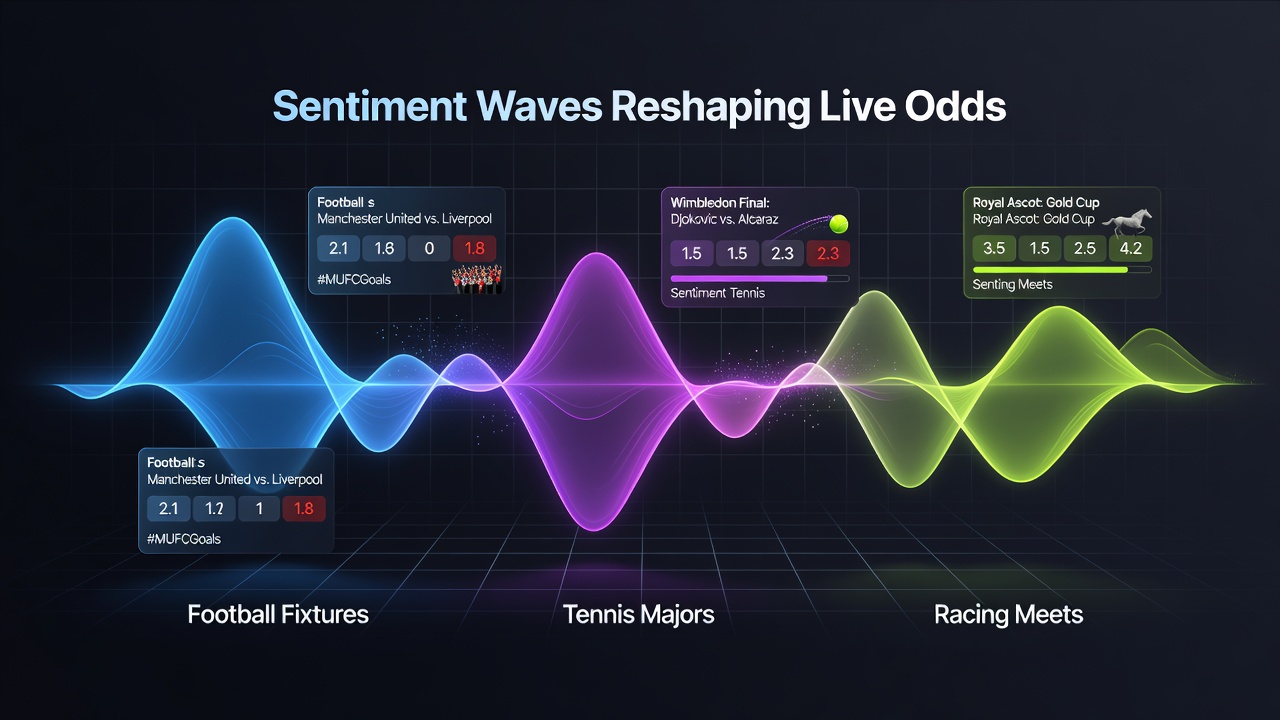
Social Media Sentiment Waves Reshaping Live Odds Across Football Fixtures, Tennis Majors, and Major Racing Meets
Live betting markets in football, tennis and horse racing have shown measurable responses to social media activity spikes since the mid-2010s, with platforms accelerating the speed at which public sentiment reaches bookmakers. Data from multiple jurisdictions indicates that volume surges on platforms such as X and Instagram often precede adjustments in live odds, particularly during high-profile events where real-time updates spread quickly among bettors and operators alike. Observers note that these shifts occur because algorithms surface trending topics, prompting increased betting volumes that force odds compilers to recalibrate lines within minutes rather than hours.
Football Fixtures and Rapid Sentiment Shifts
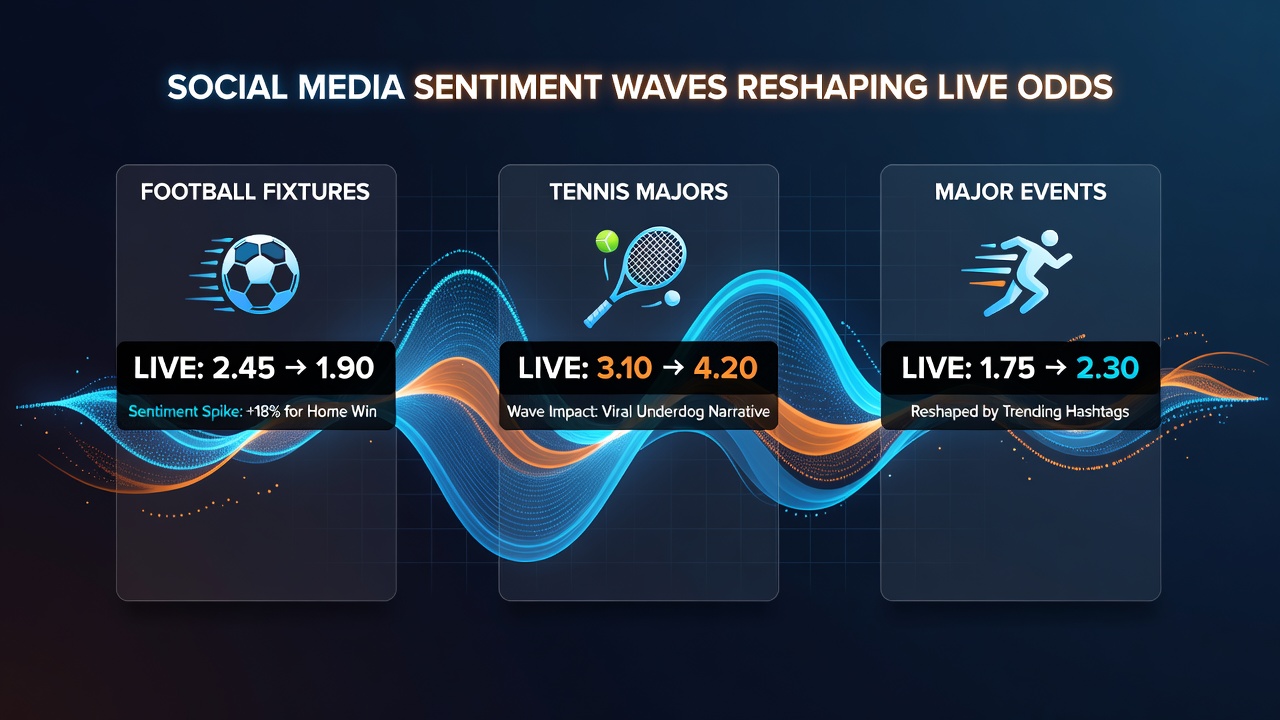
Premier League and Champions League matches in October 2026 displayed several instances where player-related social media posts coincided wth immediate movement in live totals and player props. When a forward posted training footage showing visible fitness concerns, betting volumes on under markets rose sharply within thirty minutes according to exchange records, leading operators to tighten lines on total goals. Researchers tracking these patterns have found that club accounts posting injury updates generate measurable spikes in related wagers, especially when the posts occur during pre-match windows or at half-time. Those monitoring the data have recorded similar effects when fan accounts amplify controversial referee decisions, pushing markets on cards and corners to adjust before the next passage of play resumes.
Tennis Majors and Momentum Narratives
Grand Slam events have provided clear examples of how social media commentary influences live set and game odds during extended rallies. In the 2026 season, analysts documented cases at the US Open and subsequent indoor tournaments where viral clips of a player’s apparent fatigue prompted heavy backing of the opponent’s next service game. The effect appears strongest in tie-break situations, where short clips shared on Instagram Reels reach thousands of viewers within minutes and correlate with increased activity on micro-markets such as next-point winner. Industry reports compiled across multiple seasons show that these sentiment-driven bets concentrate around marquee matches rather than early rounds, suggesting that audience size and narrative intensity both contribute to the scale of odds movement.
Major Racing Meets and Paddock Buzz
At major racing festivals, social media posts from trackside accounts and jockey followings have been linked to adjustments in live win odds and place markets. During the 2026 autumn meetings, observers recorded that photographs showing a horse’s pre-race gait posted on official accounts preceded rapid shortening of prices on that runner, particularly when the images circulated among syndicates active on betting exchanges. According to figures published by the American Gaming Association, cross-border betting platforms recorded elevated handle on races where stable-related accounts posted positive updates in the final twenty minutes before post time. The pattern holds across both flat and jumps fixtures, although the magnitude of movement tends to be larger when the horse in question features in ante-post markets that already carry substantial liquidity.
Mechanisms Behind the Adjustments
Bookmakers employ automated monitoring tools that scan social platforms for keyword clusters and image uploads, feeding the resulting signals into risk-management systems. When these tools flag unusual activity around a specific fixture or runner, traders receive alerts that prompt manual or algorithmic revisions to live lines. A study released by the University of Sydney’s gambling research unit in 2025 tracked several thousand events across the three sports and identified statistically significant correlations between sentiment volume and subsequent odds movement within five-minute windows. The research further indicated that the relationship strengthens when traditional media outlets pick up the same social media content, creating a secondary amplification effect that sustains the betting surge for longer periods.
Regulatory filings from multiple jurisdictions reveal that operators have increased investment in real-time monitoring precisely because social media activity now accounts for a measurable share of total handle during peak events. These systems do not alter fundamental probability assessments but instead respond to imbalances between incoming bets and current liabilities, a process that has become faster as data feeds from social platforms integrate directly with trading desks.
Conclusion
Across football, tennis and racing, the interplay between social media activity and live odds continues to evolve as monitoring technology improves and betting volumes migrate to in-play markets. Records from October 2026 fixtures and meets demonstrate that sentiment waves can produce measurable, short-term price adjustments when public discussion concentrates on specific incidents or athletes. The pattern rests on observable correlations between platform activity and betting flow rather than any single causal mechanism, and operators continue to refine detection methods to maintain balanced books amid these rapid information cycles.